Hardware-to-Software Integration
Developed for JuFo 2021, this assistive technology suite bridges the gap between spatial awareness and digital connectivity. The system centres on a virtual cane, dubbed the "iCane", which uses a single precise HC-SR04 ultrasonic sensor for obstacle detection, together with a vibration motor and buzzer that translate distance into tactile and audible feedback.
The core hardware-to-software integration uses three configurable distance zones to translate the sensor reading into graduated vibration and tone patterns. To make the prototype adjustable in the field, the firmware features a Serial CLI allowing for deep runtime calibration without requiring a reflash.
Communication Protocols
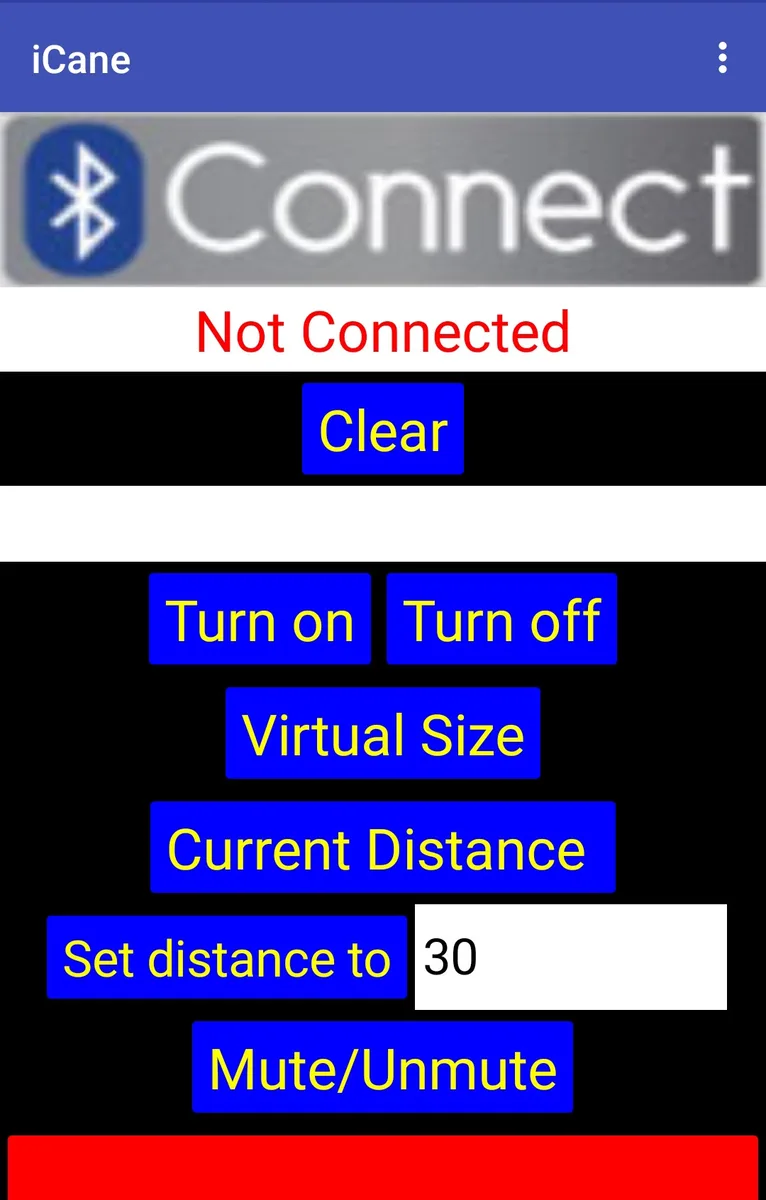
A Bluetooth Serial bridge connects the Arduino firmware to the Android control interface. The same command protocol can set the virtual cane length, mute audio feedback, read the current distance, report uptime, and switch the device on or off.
For emergency features and remote monitoring, the system connects to an Android Companion App developed specifically for this project. The app can read GPS location and open a pre-filled WhatsApp SOSmessage from its interface. A separate long press on the cane's physical button triggers an SMS through the SIM900 GSM module.
Key Highlights
- Engineered hardware architecture with single Ultrasonic sensor for obstacle detection
- Developed Arduino-based Bluetooth serial CLI interface for device control
- Built Android Companion App using MIT App Inventor with GPS tracking
- Integrated WhatsApp SOS messaging for emergency alert capability
- Implemented intelligent auto-sleep power management for extended battery life
- Created seamless Bluetooth serial communication protocol for real-time sensor data